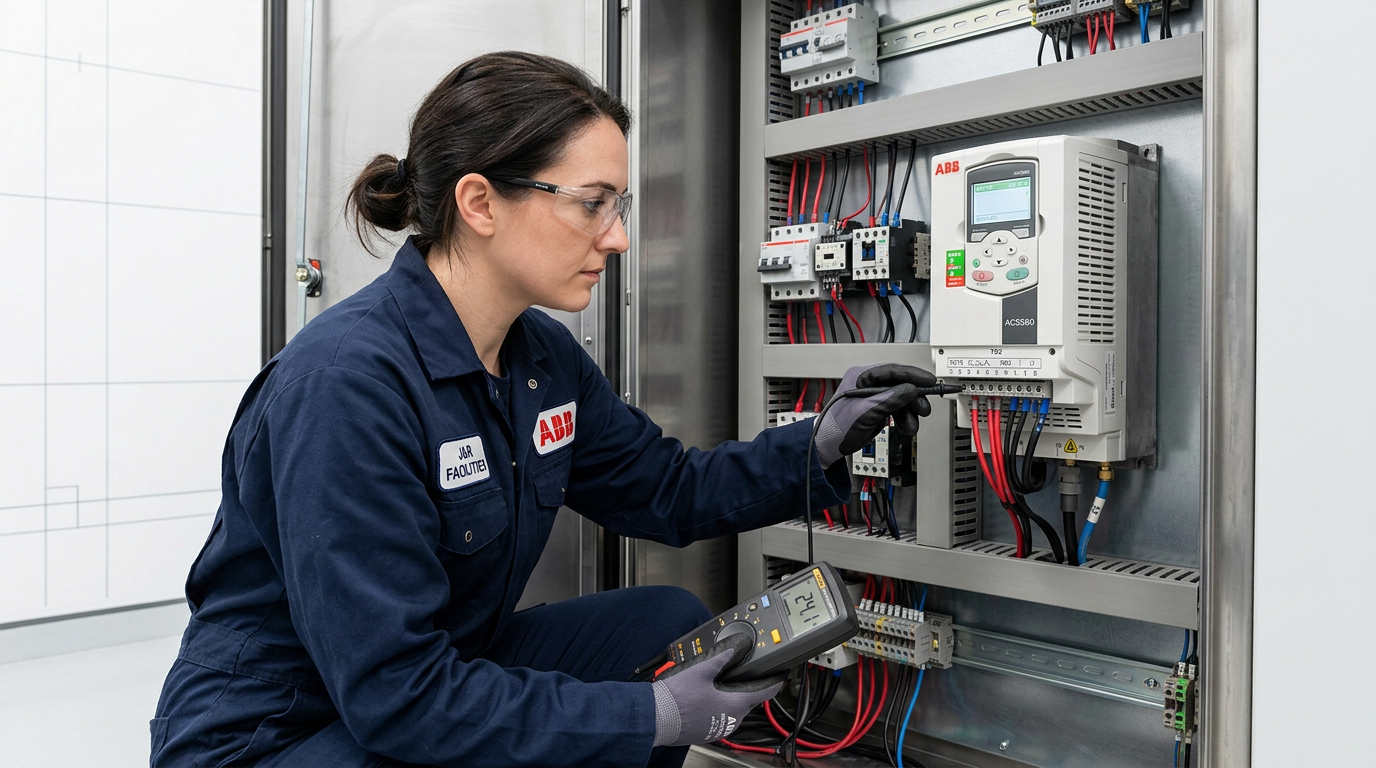
Drive Troubleshooting: A Comprehensive Guide for Industrial VFD Problems
Expert drive troubleshooting guide for common VFD faults. Learn systematic diagnostics for ABB drives, Fluke testing methods, and when to seek replacement services. For Indian engineers and plant managers.
When a variable frequency drive (VFD) trips unexpectedly on a production line, every minute of unplanned downtime costs thousands of rupees. For Indian manufacturing plants running critical processes — from conveyor systems to centrifugal pumps — the ability to perform fast, accurate drive troubleshooting can mean the difference between a quick restart and a costly shutdown. This guide is written for maintenance engineers, procurement teams, and plant managers who work with ABB drives and Fluke test instruments. We cover the most common root causes of VFD failures, a systematic diagnostic approach, and how to decide between repair and replacement to keep your operations running efficiently.
## Understanding Common VFD Problems and Their Root Causes
Before diving into diagnostics, you need a clear picture of what typically goes wrong in industrial drives. The following problems account for over 80% of field service calls in Indian manufacturing environments.
### Power Supply Anomalies (Overvoltage / Undervoltage)
- Overvoltage often occurs during regenerative braking or sudden load removal. In ABB ACS880 drives, the DC bus voltage can spike above the threshold, triggering fault code 3210.
- Undervoltage results from grid sags, loose connections, or undersized transformers. Indian plants with fluctuating grid quality see this frequently. Use a Fluke 1775 Power Quality Analyzer to log voltage events.
### Overcurrent and Motor Ground Faults
- Overcurrent can stem from shorted motor windings, mechanical jams, or incorrect parameter settings. ABB drives report fault codes like 2310 or 2340.
- Ground faults indicate insulation breakdown in the motor or cables. A megger test with a Fluke 1587 Insulation Tester is the first step.
### Overheating and Cooling Failures
- VFDs generate heat; if the ambient temperature exceeds 40°C (common in many Indian plants without air-conditioned control rooms), the drive derates or trips. Check fan operation and heat sink cleanliness.
- Motor overheating can be caused by excessive VFD carrier frequency, insufficient cooling, or harmonic currents.
### Communication and Control Signal Errors
- Profibus, Modbus, or Ethernet/IP dropouts often result from grounding loops, damaged cables, or incorrect termination. ABB’s Assistant Control Panel (ACH-AP-H) provides detailed communication diagnostics.
- Analog reference signal noise can cause erratic speed. Use a Fluke 289 True-RMS Multimeter to verify 4-20 mA signals.
## Step-by-Step Drive Troubleshooting Methodology
A structured approach saves time and avoids guesswork. Follow these steps whenever you face a drive fault.
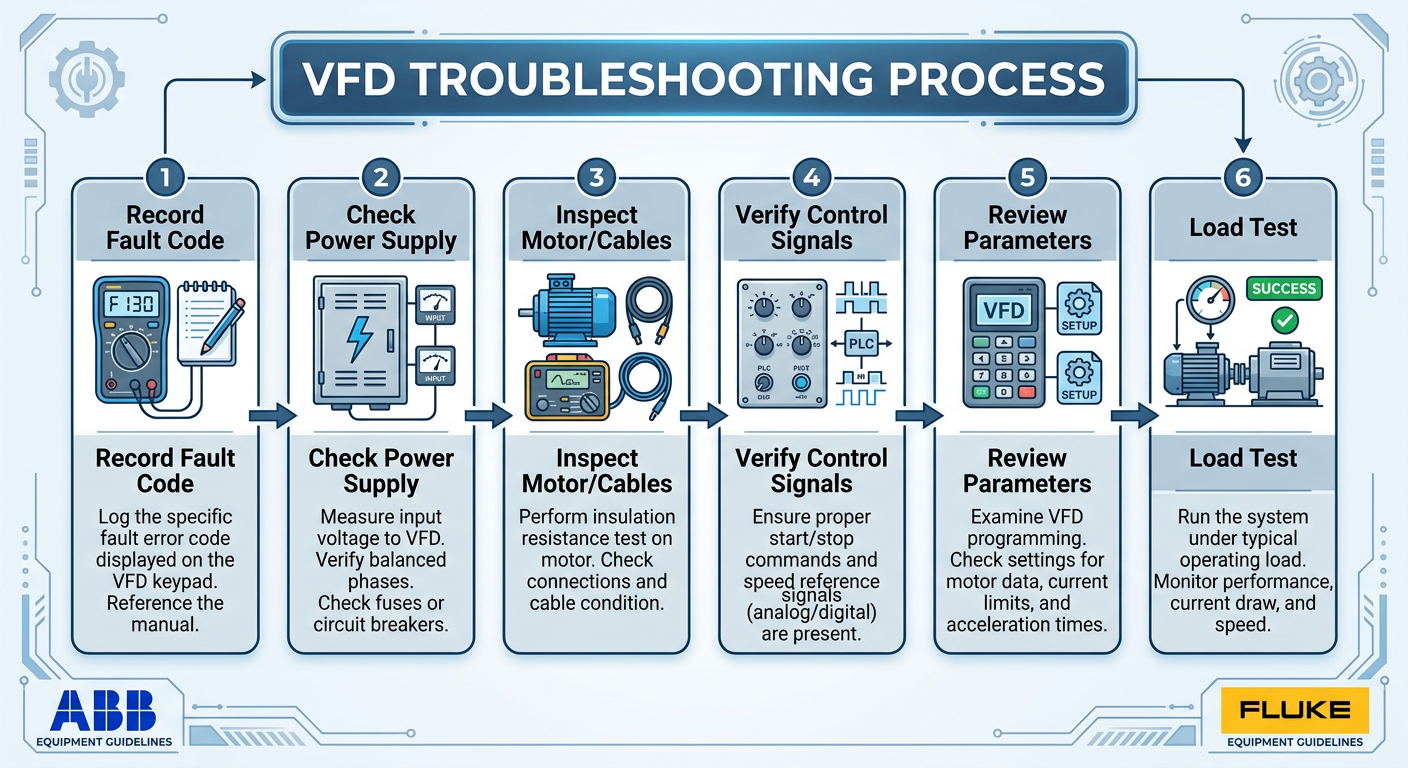
- Record the fault code and operating conditions – Note the exact error on the ABB drive display (e.g., ACS580 showing “OVERSPEED”). Also log motor current, speed, and DC bus voltage before the trip.
- Check external power supply – Measure incoming three-phase voltage at the drive input terminals. Make sure it is within ±10% of rated voltage.
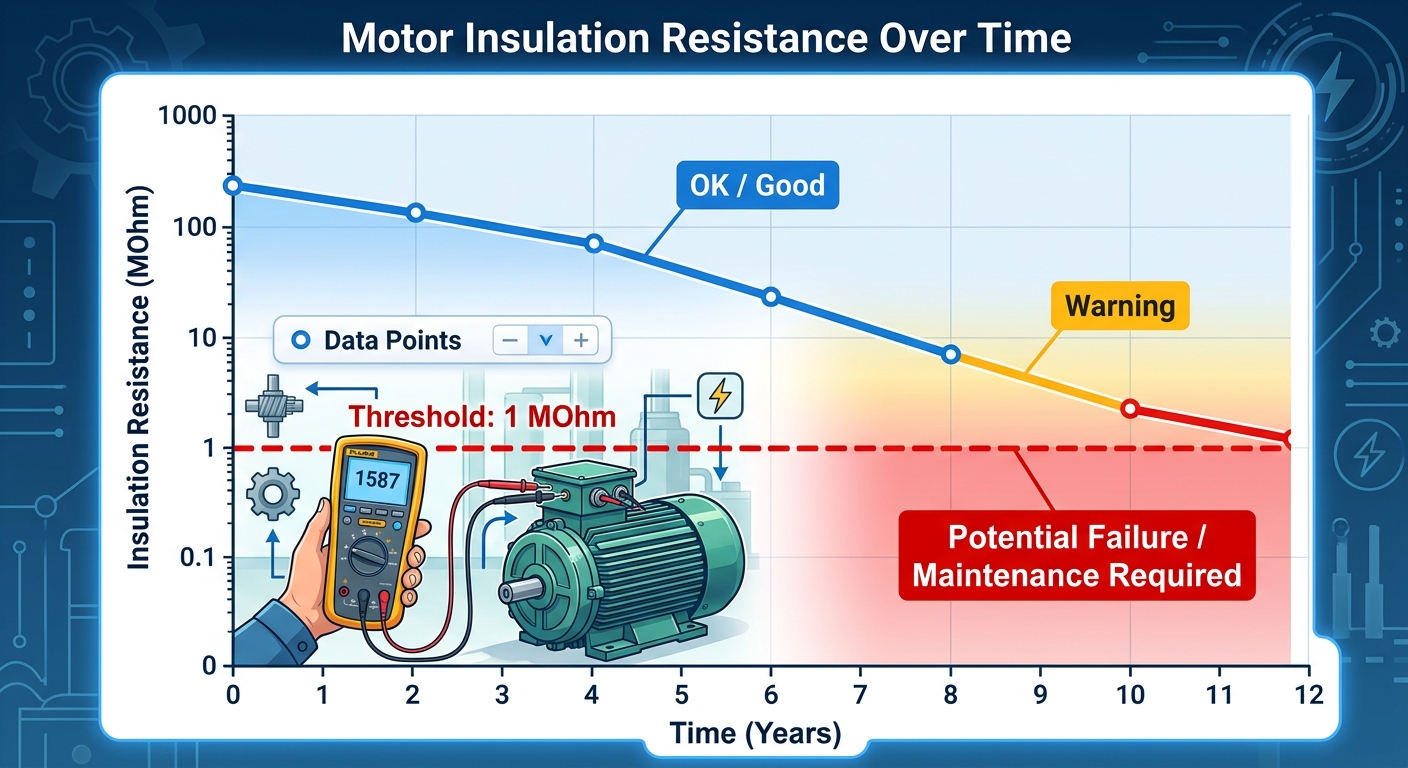
- Inspect motor and cables – Isolate the motor from the drive and perform insulation resistance tests. A reading below 1 MΩ indicates potential rewinding or replacement.
- Verify control wiring and reference signals – Use your Fluke multimeter to measure signal levels at the drive I/O terminals. Look for loose connections or moisture ingress.
- Review drive parameters – Confirm that motor nameplate data (rated current, voltage, speed) matches the drive settings. Incorrect parameterization is a leading cause of nuisance trips.
- Perform a load test – Disconnect the load and run the drive to a no-load motor. If the fault disappears, the issue lies in the driven equipment (pump, fan, conveyor).
This systematic approach, combined with tools like the Fluke 438-II Power Quality and Motor Analyzer, can pinpoint electrical and mechanical issues in under 30 minutes.
## Decoding ABB Drive Error Codes and Alarms
ABB’s drive family (including ACS180, ACS380, ACS580, and ACS880) uses standardized fault coding. Knowing how to interpret these codes speeds up drive troubleshooting significantly.
| Fault Code | Description | Likely Root Cause |
|---|---|---|
| 3210 | DC bus overvoltage | Regenerative load, braking resistor missing |
| 2310 | Motor overcurrent | Short circuit, mechanical stall |
| 2340 | Motor undercurrent | Broken shaft, loose belt |
| 3381 | Overspeed | Feedback loss, parameter error |
| FF86 | Ground fault | Insulation breakdown, moisture |
For detailed help, the ABB Drivetune app and the Assistant Control Panel offer real-time diagnostic windows. If you’re working with older drives, refer to the specific manual. Digital Controls supports all ABB series — browse our ABB drives for cross-reference guides.
### Real-World Example: Conveyor Drive Trips on Overcurrent
A cement plant in Rajasthan experienced repeated “2310 Motor overcurrent” faults on a belt conveyor driven by an ACS580. Using a Fluke Ti401 PRO Thermal Camera, engineers found the gearbox running 15°C above normal. After cleaning the gearbox cooling fins and verifying the motor parameters, the drive operated without faults. This illustrates why drive troubleshooting must include mechanical inspection, not just electrical checks.
## Using Fluke Instruments for Precise Diagnostics
Reliable drive troubleshooting depends on accurate measurements. Fluke tools, available through Digital Controls, give you the data you need to make informed decisions.
- Fluke 1587 FC Insulation Tester – Essential for motor winding and cable insulation tests. Perform a PI (Polarization Index) test; values below 2.0 suggest insulation degradation.
- Fluke 1775 Power Quality Analyzer – Capture transient events and harmonic distortion. High total harmonic distortion (THD > 8%) can cause DC bus capacitor aging.
- Fluke Ti401 PRO Thermal Camera – Scan drive heat sinks, power modules, and motor housings. Hotspots indicate poor connections, failing fans, or impending component failure.
- Fluke 289 Digital Multimeter – Measure DC bus voltage, analog signals, and resistance with high accuracy.
For a complete range of Fluke products, visit our Fluke instrumentation page.
## When to Repair vs. Replace Your VFD
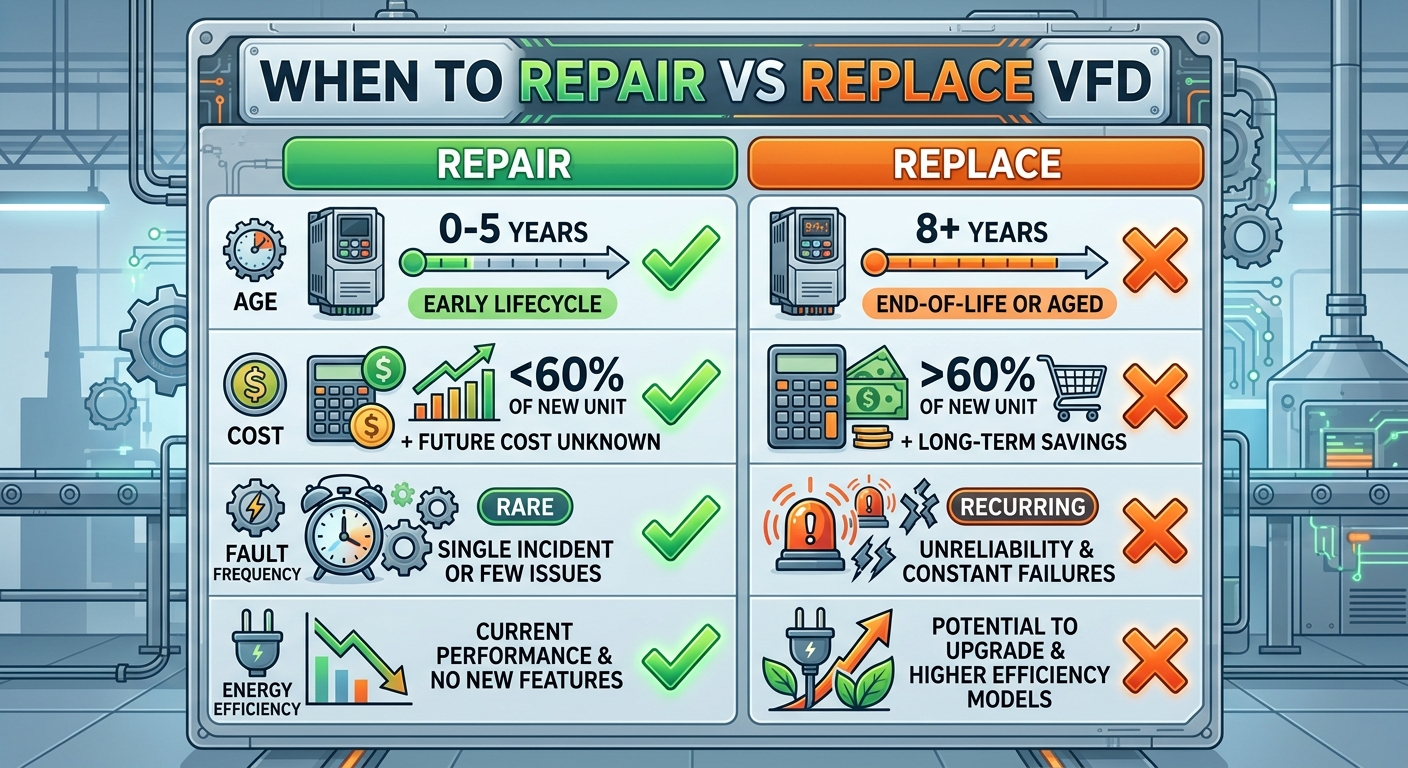
Not every fault requires a new drive. However, certain conditions make replacement more cost-effective than repair — especially when considering energy efficiency and modern drive features.
### Repair is Viable When:
- The fault is a single, replaceable component (e.g., cooling fan, IGBT module, capacitor bank).
- The drive is less than 5 years old and still supported by the manufacturer.
- Spare parts are readily available within 48 hours.
### Replacement is Recommended When:
- The drive is over 8–10 years old and fault frequency is increasing.
- Repair cost exceeds 60% of a new drive price.
- You want to upgrade to a more energy-efficient model, such as an ABB ACS880 with built-in energy optimizer.
- The drive lacks modern communication protocols needed for Industry 4.0 integration.
Digital Controls offers both repair services and seamless drive replacement. Our team can help you evaluate your existing equipment and recommend the best path. Visit our services page for commissioning support, control panel coordination, and replacement guidance.
## Preventive Maintenance to Avoid Drive Failures
Proactive care reduces unplanned drive troubleshooting sessions. Implement this checklist monthly:
- Clean heat sinks and verify fan operation (listen for bearing noise).
- Tighten all power and control terminals — thermal cycling loosens connections.
- Log DC bus voltage; a drift of more than 5% from nominal indicates capacitor aging.
- Perform insulation resistance tests on motor cables quarterly.
- Review drive event logs for recurring faults even if the drive hasn’t tripped.
Additionally, ABB’s unified drive family (ACS180 through ACS880) simplifies spare parts stocking and parameter backup, making maintenance easier across different applications.
## Frequently Asked Questions
Q: What is the most common cause of VFD tripping in Indian industries? A: Power supply fluctuations — both overvoltage and undervoltage — are the leading cause. Weak grids and frequent lightning transients are common in many regions. Always start drive troubleshooting by verifying incoming power quality.
Q: How can I tell if a motor fault is caused by the drive or the motor itself? A: Isolate the motor from the drive and run a no-load test with a known-good motor starter. If the motor operates smoothly, the issue lies in the drive parameters or hardware. If the motor vibrates or draws uneven current, the motor windings or bearings are likely damaged.
Q: Can I use a Fluke multimeter to diagnose ABB drive faults? A: Yes. A Fluke 289 or 117 can measure DC bus voltage, analog control signals, and resistance. For advanced diagnostics, use a power quality analyzer or insulation tester, all available from Digital Controls.
Q: When should I consider upgrading my old VFD instead of troubleshooting it? A: If the drive is more than eight years old, has frequent undocumented faults, or lacks energy-saving features like flux optimization, replacement with a modern ABB ACS580 or ACS880 often pays back in reduced energy bills and higher reliability.
## Conclusion: Don’t Let Drive Faults Slow You Down
Systematic drive troubleshooting is a critical skill for maintenance teams in Indian manufacturing. By understanding common fault causes, using the right Fluke diagnostic instruments, and knowing when to repair or replace, you can minimize downtime and improve plant productivity. At Digital Controls, we support your journey with genuine ABB drives, Fluke test equipment, and expert technical support — from selection guidance to commissioning and beyond.
Ready to solve your drive issues? Contact our team today for a free consultation or browse our variable frequency drives and ABB drive family. Let’s keep your production running.